New owners
For the person turning a good idea into a real offer, a real customer, and a real Tuesday.
The Book
Good work deserves a structure that can carry it.
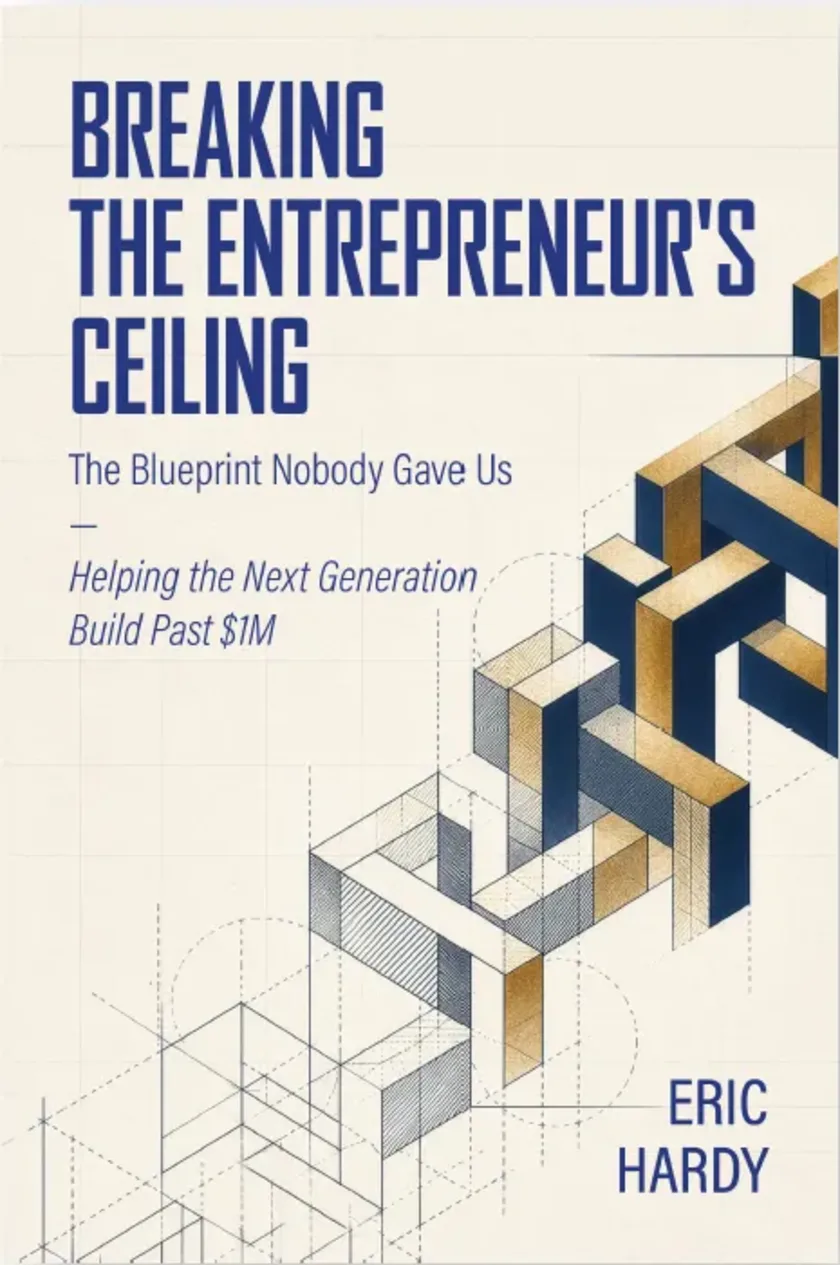
The Blueprint Nobody Gave Us
Helping the Next Generation Build Past $1M
Breaking the Entrepreneur’s Ceiling is a practical guide for building a sustainable business, not a book about finding what to build. It starts with the structure underneath the idea, so the business does not become a more exhausting version of a job.
Many businesses stall around $1M because the foundation was never engineered for durable growth. This book helps founders approach that threshold with clearer decisions, whether they are still working solo or building a team.
“It is the blueprint nobody handed us. We are handing it to you.”
Eric Hardy
Who it is for
For the person turning a good idea into a real offer, a real customer, and a real Tuesday.
For the future founder who needs a little less permission and a little more traction.
For experienced hands carrying valuable skills into a new kind of career.
For owners approaching or beyond $1M who want growth their organization can actually sustain and protect.
A sustainable practice
“This workbook is not a one time exercise. Revisit it every time your business changes.”
Eric Hardy
Inside the book
Half one
Work through the organizational footprint, offer viability, and pricing choices that give the business a durable base.
Half two
Move into acquisition, delivery, and the work of sustaining and protecting the business past $1M, whether you are solo or scaled.
About the Author
The book draws on three decades of operating through a financial crisis, a major acquisition, and multiple reinventions, alongside the perspective that comes from mentoring people through their own next chapters.
The companion Workbook turns the ideas into a place to work. Free interactive tools, including the Viability Gates assessment, help you test the decisions before they become expensive ones.
The point of view
There is enough advice that sounds good from a stage and disappears by breakfast. This book is built around the opposite: honest language, real numbers, usable questions, and a foundation you can use on Monday morning.